User Experience:
Comfort Zone
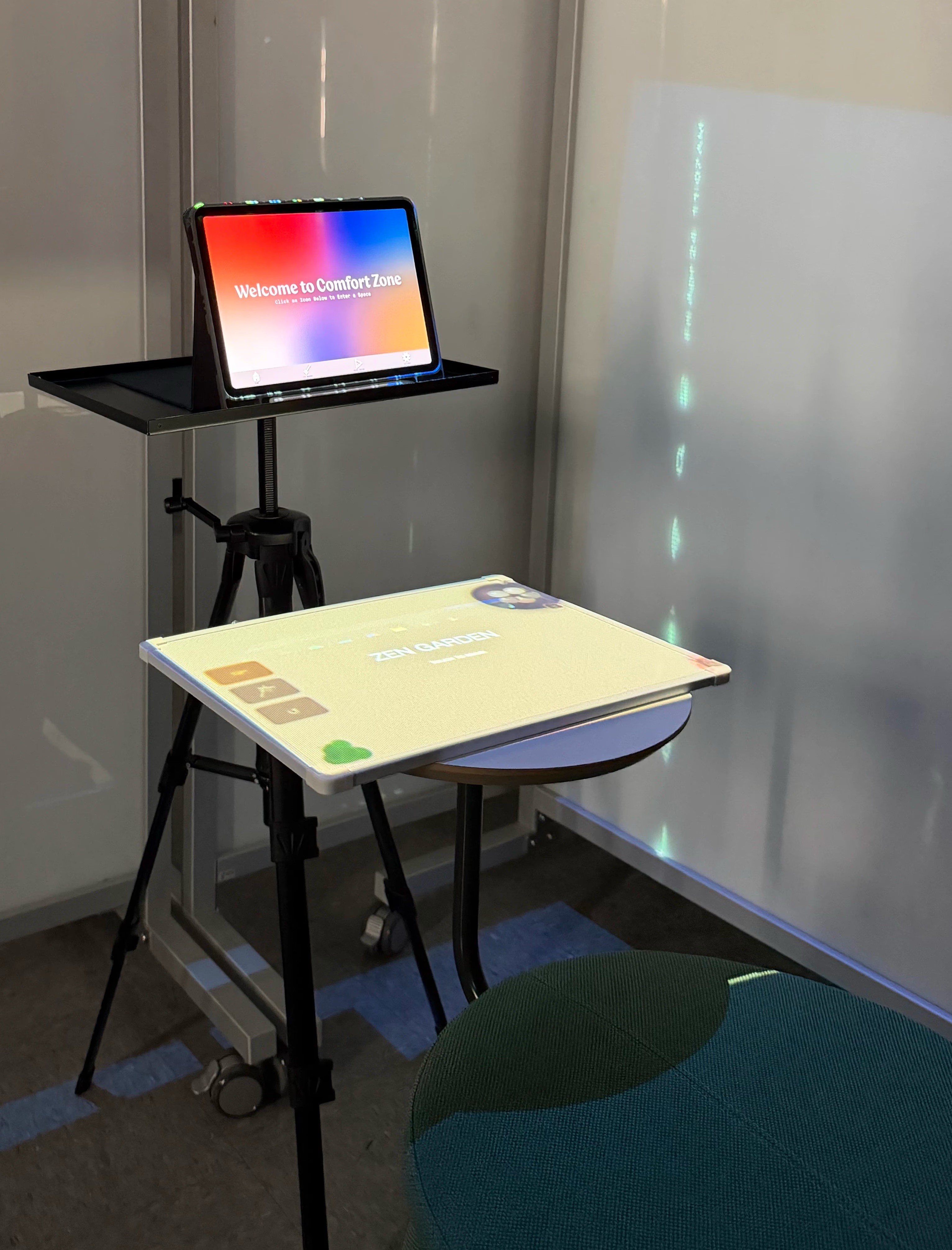
Comfort Zone is an immersive user experience designed to eliminate breakdown points in the airplane experience caused by the anxiety of passengers. The 2D screen interface and projection mapped zen garden was made to bring any airplane passenger a sense of tranquility during their in flight experience.
Research:
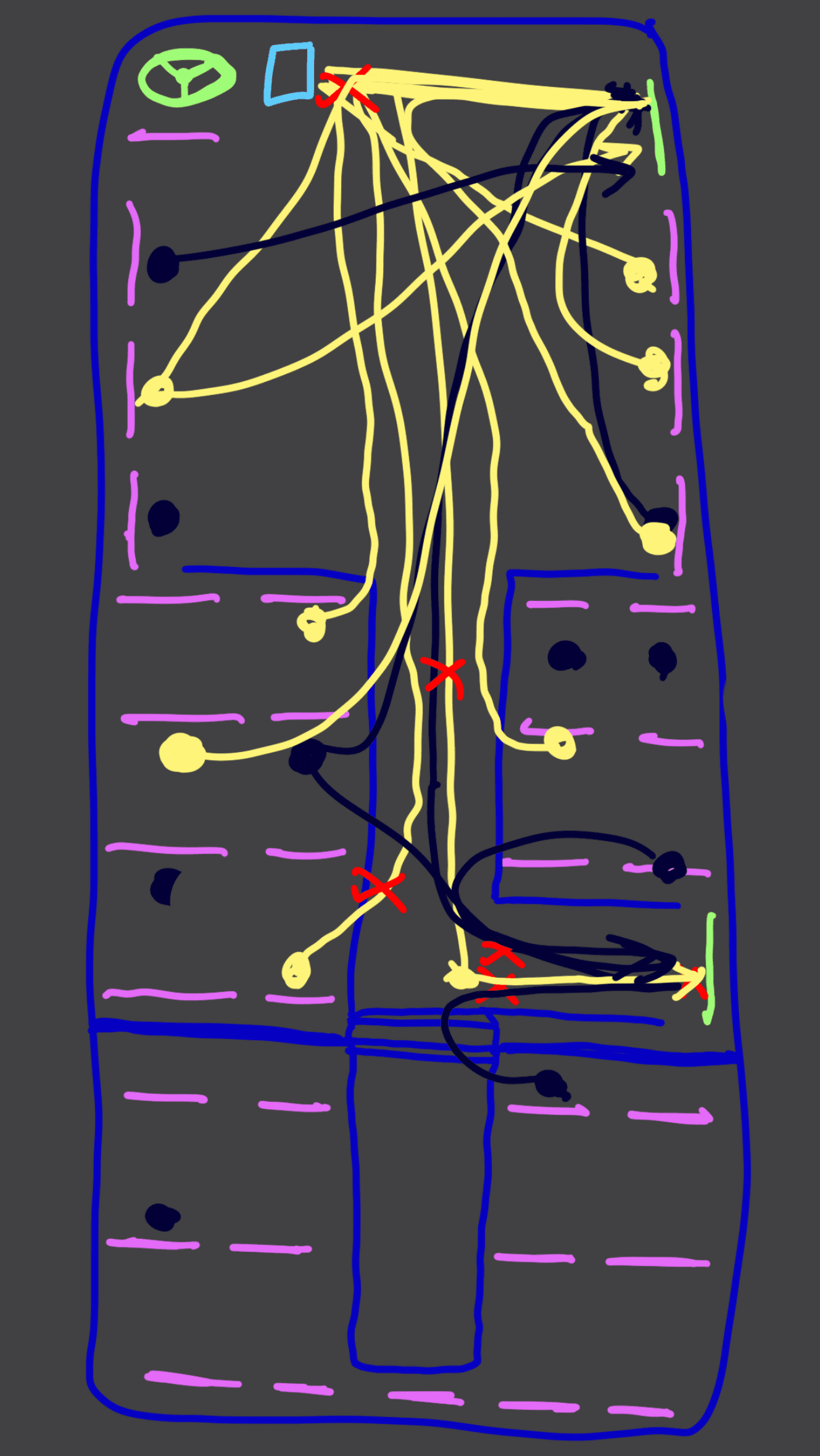
In the absence of an airplane, my team executed cross-scenario research, observing and logging user behavior on a bus, and interviewing bus riders. After our research, the primary design problem that had our focus was passenger movement and flow throughout the airplane cabin.

Cota Bus Spacial Mapping

Key Behavior Patterns
1) Threshold "pause-and-check"
People stop at entry to scan cues (phones/signage/crew).
Condition: unclear seat-direction, noise, group congestion.
Impact: creates the first bottleneck; cascades down the aisle.
2) Micro-negotiation in a narrow aisle
People yield, sidestep, and "claim" micro-spaces while passing.
Condition: stow-in-progress, seated knees/elbows, cart blockage.
Impact: small frictions compound into delays + social tension.
3) Grip-point seeking for balance
People touch armrests/side panels to stabilize while moving.
Condition: turbulence, slippery shoes, crowds, tight turns.
Impact: unsafe moments increase; movement becomes slower.
4) "Seat-as-setup" ritual
After stow, people immediately belt + arrange tray/device.
Condition: anticipating takeoff; limited time to settle.
Impact: defines readiness; interruptions raise stress.
5) Aisle-seat mobility dominance
Aisle-seat passengers stand/use lav more; window stays put.
Condition: access cost (asking others to move) is high.
Impact: uneven burden; drives "avoidance" strategies.
User Experience
Framing:
After our research it was time to identify a breakdown point in the airplane experience, and who we were solving it for. It was at this point in our process that our team pivoted from designing to enhance user flow, to designing to improve the in-seat experience.

Persona 1

Persona 2

Concept Development:
Our team decided to design an experience to alleviate flight anxiety for passengers. We explored concepts like calming scenery, journal prompts, and meditation exercises before arriving at our final experience concept— an interactive zen garden.


Brand Development:
We created a style guide highlighting our brand's typefaces, colors, logo, and styles for both the 2D and projection experience.



Demo Testing:
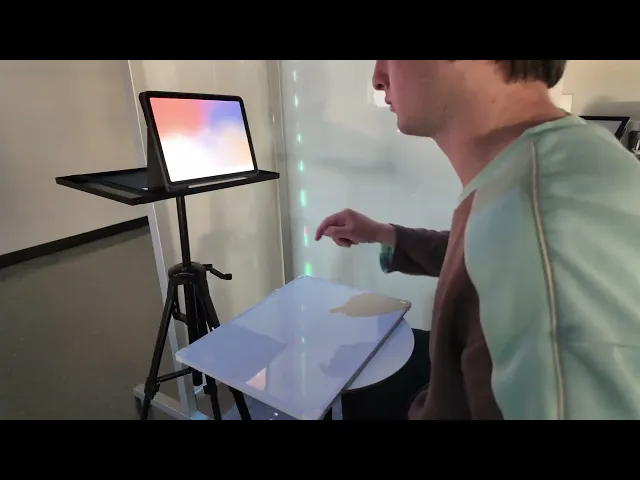
Using our system prototype, we created an environment adjacent to an airplane seat to test our experience. We learned that our zen garden was immersive and engaging, but more audio and movement could be added. Our users also had trouble with the instructions for our garden, and deciding whether to focus on the information on our 2D screen or the projection experience when interacting with the garden. We reacted by adding more instruction to our experience, and simplifying our 2D screen after adding audio and motion to compliment our zen garden experience.

Final Experience:


Reflection:
My team collaborated well and developed experience that successfully brings a sense of tranquility to airplane passengers who need it. Through this project I learned a lot about design thinking for the user experience— constantly putting myself in our user's shoes to further develop our system. I honed my collaborative skills, Improved my creative leadership, and developed my ability to delegate tasks on a team full of different skillsets.
My Role:
Project Manager
I brought my leadership skills to the
team through creative direction,
ideation, and proactive
communication. In the early stages
of our project, I brought the idea of
an anxiety reducing experience to
my team, eventually being the one to
suggest a zen Garden and the idea of
zen meditation for our final experience.
I made sure to touch base with
everyone on our team frequently,
organizing us for our presentations,
and delegating tasks.
Multi-Tool
I was lucky to be on a very skilled team.
I realized early on that some of my
teammates were more proficient than
I was with projection mapping and 2D
interface softwares. I let them take the
lead when it came to our wireframe and projection experience, filling in where I was needed. I took over the video component of our 2D screen, organizing our content for presentations, writing content for our screen, designing a logo for Comfort Zone, and filling any other gaps.